Dreaming about more land, more privacy, and room to spread out in Carlisle? Buying a home on acreage here can be incredibly appealing, but it also comes with questions that do not always show up on a typical suburban property search. If you are considering a larger parcel, understanding wells, septic systems, wetlands, frontage, and conservation limits can help you make a more confident decision. Let’s dive in.
Why Carlisle acreage feels different
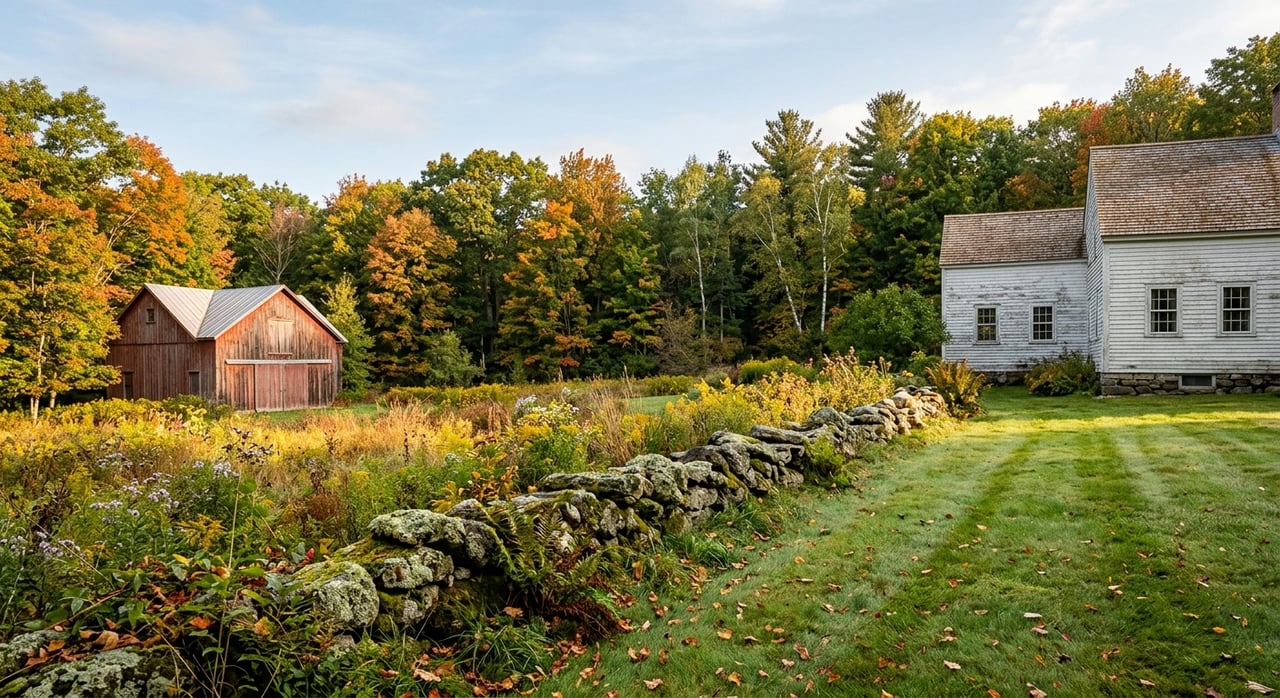
Carlisle has a distinctly rural, conservation-focused character. According to the town’s 2022 Master Plan, the landscape is defined by forests, open fields, and large residential lots, while the town’s protected open space totals about 3,488 acres, or 35% of Carlisle’s 9,913 acres.
For you as a buyer, that means acreage in Carlisle is often about more than square footage or lot size. It can also mean ongoing stewardship of land that may include woodlands, wetlands, open field, or trail-adjacent areas that shape how you use the property over time.
Some buyers see that as a major advantage. If you value privacy, natural scenery, and a quieter setting, Carlisle’s landscape can be a great fit.
Understand conservation restrictions first
One of the first things to check on an acreage property is whether it is subject to a conservation restriction. Carlisle’s Conservation Restriction Advisory Committee explains that a conservation restriction is a perpetual legal agreement that limits certain development rights in order to preserve open space, scenic views, and wildlife habitat.
That matters because a beautiful large parcel may not offer unlimited flexibility. A recorded restriction can affect what future owners may build, alter, or subdivide, so it is important to review the title record and understand exactly what is permitted before you close.
Water is a major ownership issue
In Carlisle, private water is the norm. The town’s Water Supply Regulations state that Carlisle has no municipal water supply, which means residents rely on individual on-site wells.
If you are buying acreage, you should treat the well as a major component of the property. It is not simply a utility detail. It affects daily living, future planning, and long-term maintenance.
Ask the right well questions
Before you move forward, ask for details about:
- Well yield
- Pumping-test results
- Water-quality test dates
- The lab used for testing
- Any treatment systems in place
- Any abandoned wells on site
- Potential contamination sources nearby
Carlisle’s regulations also require wells to meet Massachusetts drinking-water standards and require testing by a MassDEP-certified lab. In transfer-related situations and certain permit events, the required testing can include more items than many buyers expect, such as coliform, nitrate/nitrite, lead, PFAS, gross alpha, and radon.
MassDEP also recommends that private well owners test at least annually. That makes past records and current results especially important when you are evaluating a home purchase.
Well placement can shape future plans
The location of a well matters more than many buyers realize. Carlisle requires wells to be accessible for repair, maintenance, testing, and inspection, and setback rules apply in relation to property lines, roads, septic components, leaching fields, and barnyard or manure-storage areas.
In practical terms, that can affect where you place a barn, outbuilding, driveway change, or home addition later on. On a large lot, it is easy to assume you will have plenty of options, but site layout can narrow those choices quickly.
Septic deserves close review
Carlisle also has no municipal sewer backup. The town’s septic regulations make clear that if a septic system fails, there is no town sewer connection to fall back on, which is why the existing system and any future replacement options matter so much.
Massachusetts requires a septic inspection within two years before a sale, or within three years if the system has been pumped annually and records are available. The state’s guide to buying or selling property with a septic system confirms those requirements, and Carlisle notes that a Title 5 inspection is required to sell a home in town.
What to ask about a septic system
When you are evaluating a Carlisle acreage property, ask about:
- The age of the system
- Pumping history
- Available as-built plans
- Reserve area on the lot
- Whether the system can support planned additions
- Whether an alternative repair location still exists
Carlisle’s septic resources page also notes that the Board of Health maintains property files and as-builts. Those records can give you a clearer picture of what is already in place and what flexibility may remain.
Reserve area matters more on acreage than you may think
A larger parcel does not always mean septic replacement will be simple. Carlisle’s supplementary septic regulations explain that parcels are treated as nitrogen-sensitive areas because of private wells and on-site systems, and the town notes that alternative repair locations are often unavailable.
That means protecting open area on the lot can be essential. If parts of the land are constrained by wetlands, slopes, layout, or prior improvements, the future replacement area may be much smaller than the total acreage suggests.
Wetlands can limit how land is used
On larger Carlisle properties, wetlands and buffer zones are often among the biggest surprises for buyers. The town’s Conservation Commission states that it protects wetlands under state and federal law as well as Carlisle’s local bylaw.
The town explains that wetland resource areas can include wetlands, streams, ponds, and 100-year flood zones. Buffer zones extend 100 feet from a wetland resource area, and riverfront areas extend 200 feet from a perennial stream.
Activities may require review
Many buyers think wetlands review applies only to major construction, but Carlisle’s guidance is broader. According to the town’s tree removal guidelines, activities such as tree or brush removal, lawn expansion, ground disturbance, and construction may require permission when they fall within protected areas.
That is why a property that looks open and usable at first glance may still have regulated areas along a stream corridor, at the rear of the lot, or near a seasonal wetland. If you already have plans for clearing, landscaping, fencing, or adding hardscape, this is worth reviewing early.
Zoning and frontage still matter
When you see a large acreage number in a listing, it is easy to assume flexibility comes with it. In Carlisle, that is not always the case.
The town’s setback and zoning information shows that Residence A lots require a minimum of 1 acre and 150 feet of frontage, while Residence B lots require 2 acres and 250 feet of frontage. Pork chop lots require 4 acres and 40 feet of frontage.
The takeaway is simple: acreage alone does not tell the full story. Frontage, lot shape, access, and the position of regulated areas can all affect what the property can realistically support.
Thinking about an accessory apartment?
If you are considering multigenerational living or future flexibility, it is smart to ask early about accessory apartment rules. Carlisle does allow accessory apartments and some two-family conversions, but the town notes that these options are tied to Title 5 capacity, Board of Health rules, wetlands constraints, and zoning compliance.
You can review the town’s accessory apartment and two-family conversion guidance for the local framework. The key point is that a large lot does not automatically make an accessory unit easy to permit.
Build the right due diligence team
A Carlisle acreage purchase often benefits from a broader team than a standard home purchase. Depending on the property, that may include:
- A state-certified Title 5 inspector
- A MassDEP-certified water-testing lab
- A Massachusetts-registered well driller or pump professional
- A surveyor or land-use professional
Massachusetts provides information on system inspectors, soil evaluators, licensing, and renewal, which can be a helpful starting point when you are identifying qualified professionals.
This kind of team can help you understand not just the house itself, but also the land behind it. That is often where the most important long-term ownership questions live.
Keep home inspection rights in mind
For buyers in Massachusetts, inspection rights have stronger protections than in the past. The state announced that sellers or agents may not condition a sale on a buyer waiving a home inspection, and buyers must receive written disclosure of their inspection rights before or at the first purchase contract stage. You can read more in the state’s homebuyer inspection rights policy update.
On a Carlisle acreage property, that matters. Larger lots can hide site and systems issues that are not immediately visible, so a careful inspection process is especially important.
Buying a home on acreage in Carlisle can be incredibly rewarding when you go in with clear eyes and the right guidance. If you are weighing land, privacy, and long-term flexibility, the smartest next step is to look beyond the listing photos and understand how the property actually functions. If you would like a local perspective on Carlisle homes and neighboring Middlesex County markets, connect with KC for thoughtful guidance tailored to your move.
FAQs
What should you check first when buying acreage in Carlisle?
- Start with the well, septic system, wetlands, zoning, frontage, and any recorded conservation restriction, since those factors can affect both daily use and future plans.
Does Carlisle have public water or sewer for acreage homes?
- No. Carlisle relies on individual on-site wells and septic systems rather than municipal water or sewer service.
Do Carlisle wetlands rules affect tree removal or landscaping?
- Yes. In some locations, work such as tree or brush removal, lawn expansion, ground disturbance, and construction may require review or permission.
Can a large Carlisle lot always be subdivided or expanded?
- No. Total acreage alone does not determine what is possible, because frontage, lot shape, wetlands, zoning, and conservation restrictions may limit future changes.
Is a septic inspection required when buying a home in Carlisle?
- Yes. Carlisle requires a Title 5 inspection in connection with selling a home, consistent with Massachusetts septic-sale requirements.